On the night of February 11, 2026 Bangladesh experienced a remarkable shift in mood. As the eve of a pivotal general election arrived, what is usually a tense political night began to resemble the long, excited night before Eid. Filling living rooms with debate, laughter and renewed hope for a democratic Bangladesh, where their votes actually matter. In different parts of the country, young women even organised election henna festival gatherings, treating the journey to the polling station with the same joy reserved for major celebrations. This comparison between election eve with the night before Eid matters because it is not a casual metaphor. Across South Asian Muslim communities, it evokes a distinctive anticipation, the last minute rush, the reunions and the sense that tomorrow will be collectively celebrated. In 2026, for many Bangladeshis, that collective celebration belonged not to Eid but to the ballot.
The lost festival of voting
Elections in Bangladesh have long carried a festive spirit, blending civic duty with communal celebration. This tradition stretchesback at least to medieval times when the Pala kings were said to be chosen through public consensus. In contemporary Bangladesh, the last major moment when this festival-like energy was widely remarked upon was the 2008 election, often recalled for its exceptionally high turnout (around 87%) and for being broadly seen at home and abroad as a credible, competitive vote.
However, this vibrancy eroded over the next two decades, as elections turned into contested formalities under Sheikh Hasina’s increasingly authoritarian regime. The 2014 polls, boycotted by the opposition amid demands for a caretaker system, were marred by violence, pre-election arrests and arson attacks, creating an environment of fear that suppressed participation. Turnout plummeted to 51% with many seats uncontested. The EU declined to deploy a full Election Observation Mission (EOM) and a European Parliament resolution condemned the polls as not meeting democratic standards and expressed concerns over the violence and lack of inclusivity.
The downward spiral continued in 2018. Boycotted by opposition parties, the 11th national election was marked by ballot stuffing and voter intimidation, leaving the Sheikh Hasina regime to win with no visible opposition. In that context, the EU declined to deploy any EOM with its spokesperson citing concerns about a non-conducive environment. During the January 2024 election, criticism had explicitly moved beyond Bangladesh’s borders and the vote was widely described as staged with reports of voter suppression, procedural irregularities and manipulated outcomes, and turnout falling to a dismal 41.8%.
Thus Bangladesh’s electoral culture, once associated with public enthusiasm, began to erode amid murders, political violence and the widespread suppression of media and free speech. As an eligible first time voter in 2024, I did not even travel back to my hometown as the effort felt pointless. For many people like me, voting no longer carried excitement or meaning; the whole country felt like an opera staged in advance and we were left as a captive audience.
Post-uprising democratic reset
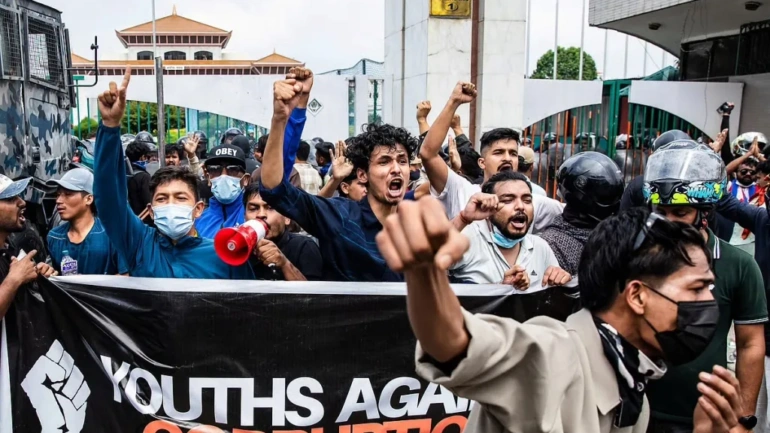
Against this background, the 13th national election was held on February 12, 2026. It was the first national vote after the 2024 student-led uprising that ended Hasina’s longstanding authoritarian regime. In the aftermath, an interim administration led by Nobel laureate Muhammad Yunus promised a transition back toward competitive politics, facing heavy pressure to deliver an election that would be seen as credible and within a clear timeframe. International critics and media outlets tracked the uprising and the stakes of Bangladesh’s political reset, treating the election as a rare test of whether the country could restore routine democratic legitimacy after years of contested governance.
In response, the interim government did not just announce an election date; it declared two days of holiday and described voting as something to be celebrated. In a televised address, Yunus urged citizens to make election day feel like an Eid festival with families going to polling stations together so that children too could witness the “grandeur” of civic rights. It was democracy sold not as ideology but as lived experience – a return of ownership to ordinary people.
In the final days before the vote, that Eid-like framing began to look less like political messaging and more like social reality. Dhaka, typically dense and loud, appeared unusually calm as voters travelled to their home constituencies, echoing the familiar pre-Eid return that empties the capital’s roads. One voter compared the quiet streets to Eid itself and said she had not seen such an election atmosphere in 15 to 20 years.
Perhaps the most vivid evidence of revived civic emotion came from first time voters and from the way they chose to express their excitement. In parts of the capital and in other districts, henna gatherings were organised, capturing the renewed enthusiasm among new voters. Participants compared 2026 with earlier elections, saying previous polls did not feel like real opportunities to vote while this time felt like an occasion worth remembering. One student described putting henna on her hands like Eid, preparing to go to the polling center with joy and hope. From a distance, it would be easy to dismiss such imagery as youthful theatrics. But in societies where public life has been constrained, symbolic gestures often signal confidence because when people believe their vote counts, they begin weaving voting into the rituals of everyday life.
On February 12, the festival moved from metaphor to street level detail. Reports from across the country described long queues from the early hours and a largely peaceful environment. In districts such as Pabna, local coverage noted the visible excitement of first time voters and long lines of women and men waiting to cast ballots, including older citizens who said they had not been able to vote in previous elections. As one voter put it, “I am very happy today. I became a voter 11 years ago but this is the first time I was able to cast my ballot.” In Dhaka, The Daily Star described voters chatting at a roadside tea stall and next to it jilapis being fried and selling out quickly with many people carrying bags of sweets home after voting, a small but telling gesture that turned the ballot into something to celebrate, something to take home and share.
The election’s scale further reinforced the sense of national participation. Bangladesh has roughly 127.7 million registered voters and more than 2,000 candidates. This year polling was held in 299 constituencies and voter turnout appearing to be settle just under 60% (59.44%). While that figure may not seem high at first glance, it carries more weight in the context that the Awami League was banned from contesting after the killing of thousands of protesters during the monsoon revolution. Despite this, Awami League leaders publicly predicted that voter turnout would not exceed 20-30% and called for a mass boycott. Therefore, the turnout in the election was a notable success both politically and by the standards of Bangladesh’s more recent elections. That renewed credibility was reinforced externally as well; the EU deployed a full EOM for the first time since 2008, sending over 200 observers and its preliminary statement described the process as “credible and competently managed.”
Two months of dawn and doubt
It has been two months since the election. While the country initially exhaled in collective relief, the question now looms as to whether that festive spirit can endure. People who had not felt their vote matter in over a decade spoke about the experience with an unfamiliar satisfaction that their ballot finally counted, that the act of voting was not a performance staged in advance but a genuine transfer of civic ownership. That mood carried into small but symbolic gestures of the new order when Prime Minister Tarique Rahman sat in Dhaka traffic without VIP road closures, waiting his turn like everyone else.
That civic warmth met its first disruption not from the streets but from within the new parliament itself. On February 17, when newly elected members were sworn in, BNP lawmakers holding a commanding two-thirds majority took only their constitutional oath and declined the second, which would have bound them to serve simultaneously as members of a Constitution Reform Council tasked with enacting the July Charter within 180 working days. Opposition members from the Jamaat-e-Islami-led 11-party alliance, including the National Citizen Party, took both oaths. Without BNP participation, the council cannot function. The ruling party argues that parliament already has the authority to pursue amendments through existing mechanisms. Opposition parties frame the refusal differently.
Alleging that the government had ignored public mandate and substituted reform with mere amendment, opposition leader Shafiqur Rahman led the Jamaat-led alliance in two parliamentary walkouts – the first on the opening day of parliament over the president’s address and the second on April 1 over the government’s continued failure to convene the Reform Council. Emerging from the second walkout, Rahman was unambiguous. “What other path do we have except a movement? We will organise a movement with the people,” he said. The 11-party alliance has since signalled that its top leaders will convene to formalise protest programmes.
The NCP, born from the very uprising that made this election possible, has been equally direct, warning that the BNP has begunjourneying in the opposite direction from the charter it once publicly endorsed. Compounding this, the question of how and when local elections will be held remains unresolved. While opposition parties continue to demand an early contest, the State Minister for Local Government has confirmed that polls will not be organised until parliament settles the contentious issue of party symbols. The question of whether the government will retain partisan symbols in local polls or repeal the 2015 amendment that introduced them has not been been addressed within BNP ranks with members now deflecting the question to parliament rather than offering the clear position the party once held.
Amid these unresolved national pressures, the escalating tensions between the US, Israel and Iran further intensified the burdens on the new government before it had fully found its footing. The blockade of the Strait of Hormuz shut down a key waterway through which nearly half of Bangladesh’s annual remittances, which total more than $30 billion, are indirectly sustained. Over 200 flights to Middle Eastern destinations were cancelled within days, stranding thousands of migrant workers and raising fears of a remittance shock that analysts warned could, under a prolonged conflict scenario, wipe out as much as 3% of Bangladesh’s GDP. Yet amid the anxiety, the new government earned a quiet diplomatic credit. Choosing pragmatic engagement over alignment with any belligerent, Dhaka communicated directly with Tehran and secured passage under coordinated arrangements. That success has not gone unnoticed. But it has not emptied the petrol station queues, which have grown long and routine across Dhaka and beyond. The new government’s central challenge is to hold together two things at once: the hope that February ignited and the weight that the months since have layered upon it. Elections gave people back a sense of ownership. What happens next will determine whether that ownership extends beyond the ballot, into the economy, the constitution and the rhythms of a daily life that people can finally, trustingly, call their own.
Md. Abrar Hossain is an independent researcher and political analyst affiliated with several research and intellectual organisations, including Reading Club Trust, the Dacca Institute of Research and Analytics (DAIRA), Porbapkkha, WRDC Academic, and others. His research explores the intersections of politics, religion, and international relations, with a particular focus on theopolitics, radicalisation, and Bangladesh’s foreign policy. His writing has appeared in The Diplomat, East Asia Forum, and South Asia Times.
This article was originally published on Groundviews on 09 April 2026.
Image source: New York Times