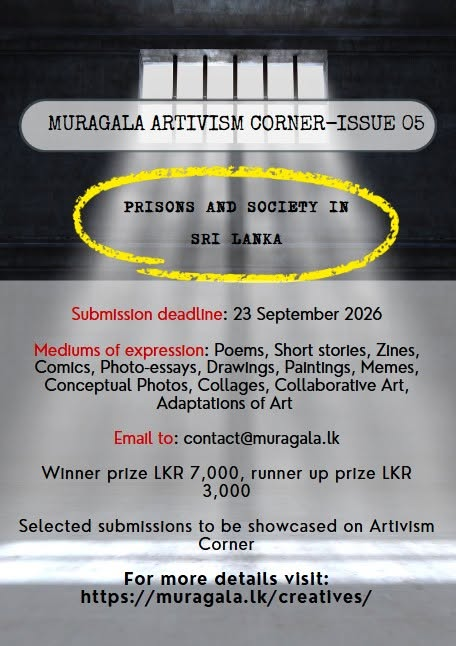
Theme: “Prisons and Society in Sri Lanka”.
Accepted mediums: Poems, Short Stories, Zines, Comics, Photo-Essays, Drawings, Paintings, Memes, Conceptual Photos, Collages, Collaborative Art, and Adaptations of Art.
Prizes: 1st Place – LKR 7,000 l 2nd Place – LKR 3,000 l 3rd Place – LKR 3,000
Selected works will be showcased on the Artivism Corner.
Deadline: 23 September 2026 Send to: contact@muragala.lk
තේමාව: “ශ්රී ලංකාවේ බන්ධනාගාර සහ සමාජය“
නිර්මාණ ඉදිරිපත් කළ හැකි මාධ්යයන්: කවි, කෙටි කතා, සයින් (Zines), චිත්රකතා, ඡායාරූප-ප්රබන්ධ (Photo-Essays), චිත්ර, සිතුවම්, මීම්ස් (Memes), සංකල්පීය ඡායාරූප, කොලාජ් (Collages), සාමූහික කලා නිර්මාණ සහ අනුවර්තන කලා කෘති.
ත්යාග: පළමු ස්ථානය: රු. 7,000 දෙවන ස්ථානය: රු. 3,000 තෙවන ස්ථානය: රු. 3,000
තෝරාගන්නා නිර්මාණ ‘Artivism Corner’ පිටුවෙහි ප්රදර්ශනය කෙරේ.
අවසාන දිනය: 2026 සැප්තැම්බර් 23
නිර්මාණ යොමු කළ යුතු විද්යුත් ලිපිනය: contact@muragala.lk கருப்பொருள்: “இலங்கையில் சிறைச்சாலைகளும் சமூகமும்”
படைப்புகளை சமர்ப்பிக்கக்கூடிய ஊடகங்கள்: கவிதைகள், சிறுகதைகள், சைன்கள், காமிக்ஸ், புகைப்படக் கட்டுரைகள், வரைபடங்கள், ஓவியங்கள், மீம்ஸ், கருத்தியல் புகைப்படங்கள், படத்தொகுப்புகள், கூட்டு கலைப் படைப்புகள் மற்றும் கலைத் தழுவல்கள்.
விருதுகள்: முதல் இடம் – ரூபா 7,000 (LKR) இரண்டாம் இடம் – ரூபா 3,000 (LKR) மூன்றாம் இடம் – ரூபா 3,000 (LKR)
தேர்ந்தெடுக்கப்படும் படைப்புகள் Artivism Corner இல் காட்சிப்படுத்தப்படும்.
கடைசி நாள்: 23 செப்டம்பர் 2026 அனுப்ப வேண்டிய மின்னஞ்சல்: contact@muragala.lk
Sri Lanka’s prison system tends to enter public discussion and consciousness only when something goes seriously wrong, usually a riot, a death, or another major incident. The recent unrest at Negombo Prison in July 2026, where nearly 30 people died, and Mahara Prison in August 2026, where one casualty was reported, has once again drawn public attention to the deeper and long-standing problems facing the country’s prison system.
One of the most serious issues is overcrowding. Many prisons in Sri Lanka hold more than three times the number of people they were designed to accommodate. Yet overcrowding is only one part of a much larger and more complex crisis. Critical reporting around the recent incidents have also raised concerns about the influence of organised criminal gangs, some of which are believed to operate with strong political connections, and the continued presence of drug trafficking networks within prisons. Other concerns include the lack of proper separation between different categories of inmates, ill-treatment and abuse of detainees, poor mechanisms for addressing prisoners’ grievances, and inadequate supervision and accountability.
The official state response to the recent incidents has moved between several explanations. Authorities have pointed to overcrowding, while also investigating whether there may have been a more organised effort by external actors behind the unrest. Government MPs have also suggested that tensions may be linked to its official anti-drug drive to address the drug issue in prisons and society. In outbreaks in the Borella New Magazine Prison, inmates who were eyewitnesses have spoken about organised efforts involving enforcement officers to provoke prisoners and to eliminate witnesses of critical underworld and drug connected cases.
Public and social media discussions have also raised concerns about how coverage of prison riots often privileges the perspectives of prison officers and state authorities over those of prisoners. They have drawn attention to allegations of torture, inhuman treatment and other human rights violations within prisons, which are issues that are often sidelined in official discourse when riots occur, and the language of control, security and restoring order comes to dominate.
These discussions also raise important questions about state accountability. What responsibility does the state bear for the conditions in which prisoners are held, and for protecting their rights and safety? When allegations of torture, abuse or excessive use of force emerge, how are they investigated, and who is held accountable? To what extent can the state focus on restoring order without addressing the underlying conditions, grievances and institutional failures that contribute to unrest in the first place?
For its 5th issue, Muragala Artivism Corner invites artistic submissions that explore how society sees prisons and prison riots or violence in prisons, and how we understand the relationship between prisons, the state and society. What do prisons represent in our collective imagination? Who ends up in prison, and why? What happens behind prison walls that remains unseen by the public? How do ideas of punishment, justice, rehabilitation, violence and human dignity shape our understanding of incarceration? We invite artists, illustrators, photographers, writers and other creative practitioners to engage with these questions.
ශ්රී ලංකාවේ බන්ධනාගාර පද්ධතිය ගැන සමාජයේ කතාබහක් ඇති වන්නේ සාමාන්යයෙන් කැරැල්ලක්, මරණයක් හෝ වෙනත් බරපතල සිදුවීමක් සිදු වූ විට පමණි. මෑතකදී, එනම් 2026 ජූලි මාසයේදී පුද්ගලයින් 30 දෙනෙකුට ආසන්න සංඛ්යාවක් මියගිය මීගමුව බන්ධනාගාරයේ නොසන්සුන්තාවය සහ අගෝස්තු මාසයේදී එක් මරණයක් වාර්තා වූ මහර බන්ධනාගාරයේ සිදුවීම, මෙරට බන්ධනාගාර පද්ධතිය මුහුණ දෙන දීර්ඝකාලීන මෙන්ම බරපතළ ගැටලුව කෙරෙහි නැවතත් සමාජ අවධානය යොමු කරවා ඇත.
මෙහි ඇති ප්රධානතම ගැටලුවක් වන්නේ අධික තදබදයයි. ලංකාවේ බොහෝ බන්ධනාගාරවල රඳවා තැබිය හැකි ධාරිතාව මෙන් තුන් ගුණයකටත් වඩා වැඩි පිරිසක් දැනටත් සිටිති. නමුත් තදබදය යනු මේ විශාල අර්බුදයේ එක් පැතිකඩක් පමණි. මෑතකදී සිදු වූ සිදුවීම් පිළිබඳ කෙරුණු විවේචනාත්මක වාර්තාවන් මගින්, ප්රබල දේශපාලන සබඳතා සහිතව ක්රියාත්මක වන සංවිධානාත්මක අපරාධ කල්ලිවල බලපෑම සහ බන්ධනාගාර තුළ සිදු වන මත්ද්රව්ය ජාවාරම් පිළිබඳවද බරපතල ලෙස කරුණු මතු කර ඇත. මීට අමතරව, විවිධ මට්ටම්වල සිරකරුවන් නිසි ලෙස වෙන් කර නොතැබීම, රැඳවියන්ට සිදුවන හිරිහැර හා වධහිංසා, සිරකරුවන්ගේ දුක්ගැනවිලි විසඳීමට නිසි යාන්ත්රණයක් නොමැතිකම සහ ප්රමාණවත් නිරීක්ෂණයක් මෙන්ම වගවීමක් නොමැතිකම වැනි ගැටලු රැසක්ද මෙහි පවතී.
මෙම සිදුවීම් සම්බන්ධයෙන් රජයේ ප්රතිචාර එකිනෙකට වෙනස් වේ. බලධාරීන් ඊට හේතුව ලෙස අධික තදබදය පෙන්වා දෙන අතරම, මේ පිටුපස බාහිර පාර්ශවයන්ගේ සංවිධානාත්මක හස්තයක් තිබේද යන්න ගැනද පරීක්ෂණ පවත්වයි. ආණ්ඩු පක්ෂයේ මන්ත්රීවරුන් පවසන්නේ බන්ධනාගාර සහ සමාජය තුළ ක්රියාත්මක වන මත්ද්රව්ය විරෝධී මෙහෙයුම් නිසා මෙවැනි නොසන්සුන්තා ඇති විය හැකි බවයි. කෙසේ වෙතත්, බොරැල්ල නව මැගසින් බන්ධනාගාරයේ සිදු වූ ප්රචණ්ඩකාරී සිදුවීම් ඇසින් දුටු සිරකරුවන් පවසන්නේ, රැඳවියන් කෝප ගැන්වීමටත්, පාතාලය සහ මත්ද්රව්යවලට සම්බන්ධ වැදගත් නඩුවල සාක්ෂිකරුවන් නැති කිරීමටත් අදාළ නිලධාරීන්ගේ මැදිහත්වීමෙන් සංවිධානාත්මක උත්සාහයක් පැවති බවයි.
බන්ධනාගාර කැරලි වාර්තා කිරීමේදී රැඳවියන්ගේ පාර්ශවයට වඩා බන්ධනාගාර නිලධාරීන්ගේ සහ රාජ්යයේ ස්ථාවරයට වැඩි ප්රමුඛතාවක් ලැබෙන බවට මහජනතාව අතර සහ සමාජ මාධ්ය තුළ කතාබහක් නිර්මාණය වී ඇත. බන්ධනාගාර තුළ සිදු වන වධහිංසා, අමානුෂික ලෙස සැලකීම් සහ මානව හිමිකම් කඩවීම් වැනි කරුණු කෙරෙහි මෙහිදී වැඩි අවධානයක් යොමු වී ඇත. නමුත් මෙවැනි කැරලි ඇති වන විට, රජය විසින් “නීතිය හා සාමය ස්ථාපිත කිරීම” සහ “ආරක්ෂාව” යන කාරණා වලට මුල්තැන දීම නිසා, මෙම මූලික මානව හිමිකම් පිළිබඳ සංවාදය යටපත් වී යයි.
මෙම තත්ත්වය රාජ්යයේ වගවීම පිළිබඳවද බරපතල ප්රශ්න මතු කරයි. රැඳවියන් තබා සිටින වාතාවරණය මෙන්ම ඔවුන්ගේ අයිතිවාසිකම් හා ආරක්ෂාව තහවුරු කිරීමට රජයට ඇති වගකීම කුමක්ද? වධහිංසා පැමිණවීම් හෝ සීමාව ඉක්මවා බලය භාවිත කිරීම් පිළිබඳ චෝදනා එල්ල වන විට ඒ ගැන පරීක්ෂණ පවත්වන්නේ කෙසේද, සහ ඊට වගකිව යුත්තේ කවුද? නොසන්සුන්තාවට හේතු වන මූලික ගැටලුවලට සහ ආයතනික කඩාවැටීම් වලට විසඳුම් නොදී, පාලනය සහ සාමය නැවත ස්ථාපිත කිරීමට පමණක් රජයකට කොපමණ දුරකට අවධානය යොමු කළ හැකිද?
Muragala Artivism Corner 5 වන කලාපය සඳහා, සමාජයක් ලෙස අප බන්ධනාගාර, බන්ධනාගාර කැරලි හෝ ප්රචණ්ඩත්වය දකින ආකාරය මෙන්ම බන්ධනාගාරය, රජය සහ සමාජය අතර ඇති සබඳතාව ගවේෂණය කරන කලාත්මක නිර්මාණ සඳහා කෙරෙන ආරාධනයයි මේ. අපගේ පොදු සමාජ චින්තනය තුළ බන්ධනාගාරයෙන් සංකේතවත් වන්නේ කුමක්ද? බන්ධනාගාරගත වන්නේ කවුද, සහ ඒ ඇයි? බන්ධනාගාර තාප්පවලට මුවාවී මහජනතාවට නොපෙනී සිදු වන්නේ කුමක්ද? දඬුවම, යුක්තිය, පුනරුත්ථාපනය, ප්රචණ්ඩත්වය සහ මිනිස් ගෞරවය වැනි සංකල්ප මගින් සිරගත කිරීම පිළිබඳ අපගේ අවබෝධය සකස් වන්නේ කෙසේද? මෙම ප්රශ්න සමඟ නිර්මාණාත්මකව සම්බන්ධ වන ලෙස අපි කලාකරුවන්ට, චිත්ර ශිල්පීන්ට, ඡායාරූප ශිල්පීන්ට, ලේඛකයින්ට සහ අනෙකුත් නිර්මාණකරුවන්ට ආරාධනා කරමු.
இலங்கையின் சிறைச்சாலை அமைப்பானது, கலவரம், உயிரிழப்பு அல்லது மற்றொரு பாரிய அசம்பாவிதம் என ஏதேனும் தீவிரமான தவறு நடக்கும் போது மட்டுமே பொதுவாக பொதுமக்களின் கலந்துரையாடல்களிலும் கவனத்திலும் இடம்பெறுகின்றது. ஜூலை 2026 இல் சுமார் 30 பேர் உயிரிழந்த நீர்கொழும்பு சிறைச்சாலையின் சமீபத்திய அமைதியின்மை மற்றும் ஆகஸ்ட் 2026 இல் ஒரு உயிரிழப்பு பதிவான மகர சிறைச்சாலையின் கலவரம் ஆகியவை, நாட்டின் சிறைச்சாலை அமைப்பு எதிர்கொள்ளும் ஆழமான மற்றும் நீண்டகால பிரச்சினைகள் மீது மீண்டும் பொதுமக்களின் கவனத்தை ஈர்த்துள்ளன.
மிகவும் தீவிரமான பிரச்சினைகளில் ஒன்று இடநெரிசலாகும். இலங்கையிலுள்ள பல சிறைச்சாலைகள், அவை எவ்வளவுக் கொள்ளளவிற்காக வடிவமைக்கப்பட்டனவோ அதைப்போல் மூன்று மடங்குக்கும் அதிகமான எண்ணிக்கையிலான மனிதர்களைக் கொண்டிருக்கின்றன. இருப்பினும், இடநெரிசல் என்பது மிகப்பரிய மற்றும் சிக்கலான ஒரு நெருக்கடியின் ஒரு பகுதி மட்டுமே. சமீபத்திய அசம்பாவிதங்கள் குறித்தான விமர்சன ரீதியான அறிக்கைகள், ஒழுங்கமைக்கப்பட்ட குற்றக் கும்பல்களின் செல்வாக்கு (அவற்றில் சில பலமான அரசியல் தொடர்புகளுடன் இயங்குவதாக நம்பப்படுகிறது) மற்றும் சிறைச்சாலைகளுக்குள் போதைப்பொருள் கடத்தல் வலையமைப்புகளின் தொடர்ச்சியான இருப்பு ஆகியவைக் குறித்த கவலைகளையும் எழுப்பியுள்ளன. பல்வேறு பிரிவு கைதிகளுக்கு இடையே சரியான இடைவெளி இன்மை, தடுத்து வைக்கப்பட்டிருப்பவர்களைக் கொடுமைப்படுத்துதல் மற்றும் துஷ்பிரயோகம் செய்தல், கைதிகளின் குறைதீர்ப்பதற்கான முறையான வழிமுறைகள் இன்மை, மற்றும் போதுமான மேற்பார்வை மற்றும் பொறுப்புக்கூறல் இல்லாமை ஆகியவை ஏனைய கவலைகளில் அடங்கும்.
சமீபத்திய அசம்பாவிதங்கள் தொடர்பான அதிகாரப்பூர்வ அரசுப் பதில்கள் பல விளக்கங்களுக்கு இடையே மாறிமாறி வந்துள்ளன. சிறைச்சாலைகளில் மற்றும் சமூகத்தில் காணப்படும் போதைப்பொருள் பிரச்சினையைத் தீர்ப்பதற்கான அரசின் உத்தியோகபூர்வ போதைப்பொருள் எதிர்ப்பு நடவடிக்கைக்கும் இந்த பதற்றங்களுக்கும் தொடர்பு இருக்கலாம் என அரசாங்க பாராளுமன்ற உறுப்பினர்கள் தெரிவித்துள்ள அதே வேளையில், அதிகாரிகள் இடநெரிசலைச் சுட்டிக்காட்டியும், இந்த அமைதியின்மையின் பின்னணியில் வெளித்தரப்பினரின் ஒழுங்கமைக்கப்பட்ட முயற்சி எதுவும் இருக்கிறதா என்பது குறித்தும் விசாரணை நடத்தி வருகின்றனர். பொரளை நியூ மகசின் சிறைச்சாலையில் ஏற்பட்ட கலவரங்களில், பாதாள உலக மற்றும் போதைப்பொருள் தொடர்பான முக்கிய வழக்குகளின் சாட்சிகளை அழிப்பதற்கும், கைதிகளைத் தூண்டிவிடுவதற்கும் அமலாக்கத்துறை அதிகாரிகளை உள்ளடக்கிய ஒழுங்கமைக்கப்பட்ட முயற்சிகள் மேற்கொள்ளப்பட்டதாக நேரில் கண்ட கைதிகள் தெரிவித்துள்ளனர்.
பொது மற்றும் சமூக ஊடக விவாதங்கள், சிறைச்சாலைக் கலவரங்கள் பற்றிய செய்திப் பதிவுகள் எவ்வாறு கைதிகளின் கோணங்களை விட சிறைத்துறை அதிகாரிகள் மற்றும் அரசு அதிகாரிகளின் பார்வைகளுக்கே முன்னுரிமை அளிக்கின்றன என்பது குறித்தான கவலைகளையும் எழுப்பியுள்ளன. சிறைச்சாலைகளுக்குள் இடம்பெறும் சித்திரவதைகள், மனிதநேயமற்ற நடத்தை மற்றும் ஏனைய மனித உரிமை மீறல்கள் பற்றிய குற்றச்சாட்டுகள் மீது அவை கவனத்தை ஈர்த்துள்ளன; கலவரங்கள் ஏற்படும் போது, அரசாங்கக் பேச்சுக்களில் இத்தகைய பிரச்சினைகள் பெரும்பாலும் ஓரம் தள்ளப்பட்டு, கட்டுப்பாடு, பாதுகாப்பு மற்றும் அமைதியை மீட்டடுத்தல் ஆகிய சொற்பிரயோகங்களே ஆதிக்கம் செலுத்துகின்றன.
இந்த விவாதங்கள் அரசின் பொறுப்புக்கூறல் குறித்த முக்கியமான கேள்விகளையும் எழுப்புகின்றன. கைதிகள் வைக்கப்பட்டுள்ள சூழ்நிலைகளுக்கும், அவர்களின் உரிமைகள் மற்றும் பாதுகாப்பைப் பாதுகாப்பதற்கும் அரசு என்ன பொறுப்பைக் கொண்டுள்ளது? சித்திரவதை, துஷ்பிரயோகம் அல்லது அளவுக்கு அதிகமான பலப்பிரயோகம் பற்றிய குற்றச்சாட்டுகள் எழும் போது, அவை எவ்வாறு விசாரிக்கப்படுகின்றன, யார் அதற்குப் பொறுப்பேற்கிறார்கள்? முதற்கட்டமாக அமைதியின்மைக்கு வழிவகுக்கும் அடிப்படை நிலைமைகள், குறைகள் மற்றும் நிறுவன ரீதியான தோல்விகளுக்குத் தீர்வு காணாமல், அமைதியை மீட்டெடுப்பதில் மட்டும் அரசால் எந்த அளவிற்கு கவனம் செலுத்த முடியும்?
தனது 5 ஆவது பதிப்பிற்காக, ‘முரகல ஆர்ட்டிவிசம் கோர்னர்’ (Muragala Artivism Corner) சிறைச்சாலைகள், சிறைக் கலவரங்கள் அல்லது சிறை வன்முறைகளை சமூகம் எவ்வாறு பார்க்கிறது என்பதையும்; சிறைச்சாலைகள், அரசு மற்றும் சமூகத்திற்கு இடையிலான உறவை நாம் எவ்வாறு புரிந்துகொள்கிறோம் என்பதையும் ஆராயும் கலைப் படைப்புகளை வரவேற்கிறது. நமது கூட்டுப் கற்பனையில் சிறைச்சாலைகள் எதைப் பிரதிநிதித்துவப்படுத்துகின்றன? யார் சிறைக்குச் செல்கிறார்கள், ஏன்? சிறைச் சுவர்களுக்குப் பின்னால் நடக்கும் பொதுமக்களின் பார்வைக்குத் தெரியாத விஷயங்கள் என்ன? தண்டனை, நீதி, மறுவாழ்வு, வன்முறை மற்றும் மனித கண்ணியம் பற்றிய யோசனைகள் சிறைவாசம் பற்றிய நமது புரிதலை எவ்வாறு வடிவமைக்கின்றன? இந்தக் கேள்விகளுடன் இணையுமாறு கலைஞர்கள், ஓவியர்கள், நிழற்படக் கலைஞர்கள், எழுத்தாளர்கள் மற்றும் பிற படைப்பாளிகளுக்கு நாங்கள் அழைப்பு விடுக்கின்றோம்.